Thinking about buying a vacant lot in Cape Coral? It can be a smart move, but raw land here is not just about finding a parcel you like and making an offer. Before you buy, you need to know whether that lot can actually support the home or project you have in mind, what utility and flood-related costs may come with it, and how long approvals could take. This guide walks you through the key issues to review so you can make a more confident decision in Cape Coral. Let’s dive in.
Why buildability matters first
In Cape Coral, a vacant lot’s value depends heavily on whether you can legally and practically build on it. The city advises buyers to verify zoning, future land use, setbacks, utility availability, and parcel-specific restrictions before closing.
That means two lots with the same size and price may not offer the same opportunity. One may be ready for a straightforward build, while another may involve added costs, design limits, or delays.
Check zoning and future land use
Zoning tells you what uses are allowed and what development rules apply to the property. In Cape Coral, zoning can control lot size, lot width, setbacks, height, density, and screening requirements.
You should also confirm the future land use designation. The city notes that if a rezoning request conflicts with the future land use map, a future land use map amendment must happen first.
Understand timing if changes are needed
If the lot does not fit your intended use today, rezoning is not usually a quick solution. According to the city, rezoning typically takes 3 to 6 months.
A special exception usually takes about 3 months and requires two public hearings. If your plan depends on either one, it is smart to treat that timing as part of your buying decision, not an afterthought.
Review minimum parcel standards
Cape Coral’s current dwelling requirements state that a standard dwelling needs at least 10,000 square feet of land area. The city also notes that one home is allowed per buildable residential parcel with at least 10,000 square feet.
You will also want to confirm the required front, side, and rear setbacks, along with any easements. For example, a structure cannot encroach into the 6-foot utility easement.
Utilities can change the real cost
A lot may look affordable at first glance, but utility costs can materially affect your all-in budget. In Cape Coral, water, sewer, irrigation availability, and assessment status deserve close review before you close.
This is especially important in areas affected by the Utilities Extension Project, also called the UEP. These utility-related charges and requirements can apply even to vacant parcels.
Know whether the lot is in a UEP area
Cape Coral’s UEP expands city water, sewer, and irrigation into previously unserved areas. The city states that developed parcels in a UEP area that are adjacent to water and sewer utilities must connect within 180 days of the Notice of Availability Letter.
For buyers of vacant land, the key issue is whether the parcel sits in an assessment area and what charges may already exist or still be due. That can affect both your purchase decision and your future build timeline.
Understand assessments and connection costs
Cape Coral states that UEP assessments are one-time charges that apply to all parcels in the assessment area, including vacant lots. These assessments may be prepaid or billed through the annual tax bill.
If city services are available but the parcel is not in an assessment area, the city uses CIAC instead. On the connection side, the city lists a $325 meter installation fee, a $225 utility account deposit, and a $100 septic abandonment permit fee, while a typical plumber connection is estimated at $2,000 to $3,000.
Watch right-of-way and easement impacts
Access is not just about whether the lot touches a road. Cape Coral notes that UEP work generally takes place in the public right-of-way, which usually extends about 20 feet from the edge of pavement, plus an additional 6-foot public utility easement.
Those dimensions can affect landscaping, construction staging, and how your future plans fit on the site. It is worth reviewing them early so you are not surprised later.
Floodplain review is essential in Cape Coral
Flood risk is a major part of vacant land due diligence in Cape Coral. Before you buy, you should understand the parcel’s flood zone, the elevation-related requirements tied to that zone, and how flood insurance may factor into your long-term costs.
Cape Coral participates in the National Flood Insurance Program and the Community Rating System. The city’s current CRS rating is Class 5.
Verify flood zone and elevation data
Cape Coral’s flood-risk portal can show a parcel’s flood zone, Base Flood Elevation, Design Flood Elevation, and any existing elevation certificates. This is useful because flood-related standards can influence both building design and total project cost.
A lot may still be buildable, but the path to building may differ based on floodplain conditions. Looking at this data early helps you budget more accurately.
Factor in flood insurance implications
The city states that flood insurance is required for many property owners and available to all properties, including those in X zones. Cape Coral also says properties in A, AE, and V zones qualify for a 25% discount under the CRS program, while X-zone properties qualify for a 10% discount.
That does not mean every lot will carry the same insurance cost. It does mean flood classification is something you should evaluate as part of the overall ownership picture.
Waterfront lots need extra review
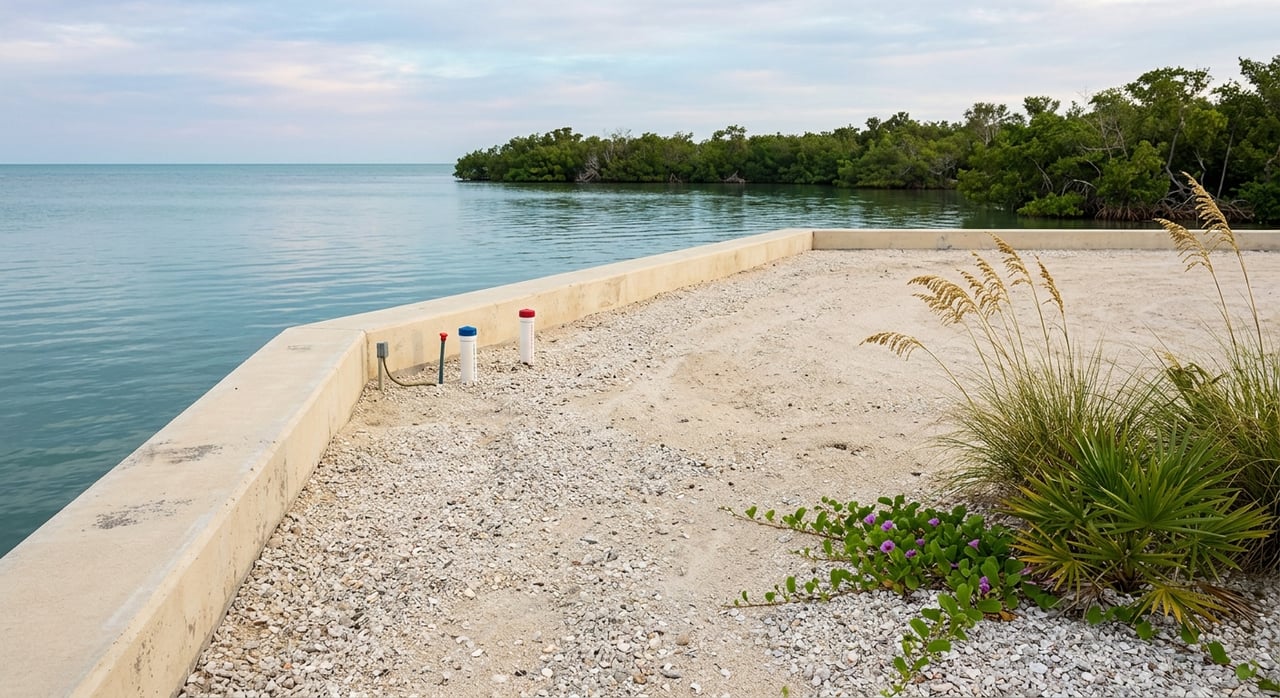
Waterfront land in Cape Coral can be appealing, but it often comes with another layer of engineering, permitting, and cost. If you are considering a canal lot, seawall requirements should be part of your research from day one.
In many cases, the seawall is not just an upgrade. It may be a condition tied to future occupancy.
Know when a seawall is required
Cape Coral’s dwelling requirements say that on saltwater canals, a seawall must be in place before a Certificate of Occupancy can be issued. On freshwater canals, an alternative seawall may be allowed.
This makes waterfront engineering a real budget item. It is not just a cosmetic feature or optional future improvement.
Understand permit requirements
For residential seawalls, the city requires a Marine Improvement permit, a site plan, and architectural or structural plans. If the site is not on fresh water, state approval is also required, along with a burrowing owl and gopher tortoise affidavit.
For freshwater alternative seawalls, the city also requires an engineer-sealed design and compliance with city engineering standards. These details matter because they can affect both timeline and total cost.
Carrying costs matter even before you build
A vacant lot still has ongoing costs. If you plan to hold land for a future build or investment, those annual charges should be part of your underwriting before you buy.
Cape Coral has several non-ad valorem charges that can apply to vacant land. These can add up more quickly than some buyers expect.
Annual city-billed charges to review
Cape Coral bills stormwater fees annually on every land parcel. The city states that the 2026 stormwater rate is $156 per ERU.
The city also bills a fire service assessment on vacant and improved parcels. For fiscal 2026, it lists $349.32 for Tier 1 and $3.47 for Tier 2.
Lot mowing and assessment exposure
Cape Coral’s lot mowing program applies to unimproved property unless the owner files for exemption and maintains the lot below the city’s height standard. The city says owners may seek exemption if they keep the lot under 12 inches, and 2026 mowing rates range from about $44.63 to $70.48 per equivalent lot depending on district.
UEP assessments can also be significant. The city’s current assessment page shows prepayment totals for a standard 10,000-square-foot parcel ranging from $7,860 to $24,742, depending on the project area and utility package.
A simple lot due diligence checklist
When you are comparing vacant lots in Cape Coral, it helps to use the same checklist for every parcel. That keeps emotion from driving the decision and helps you spot cost differences more clearly.
Here are the key items to verify before closing:
- Zoning district and future land use
- Minimum lot size, setbacks, easements, and any legal nonconformity issues
- Flood zone, Base Flood Elevation, Design Flood Elevation, and elevation certificate availability
- Water, sewer, and irrigation availability
- Whether the parcel is in a UEP area and whether assessments or CIAC may apply
- Road frontage, right-of-way impacts, and utility easements
- Waterfront status and seawall requirements
- Annual non-ad valorem charges, including stormwater, lot mowing, fire service, and special assessments
- Private covenants, deed restrictions, and title exceptions
Don’t forget private restrictions
Not every issue will show up in the city review process. Cape Coral states that private covenants, deed restrictions, private easements, and private roads are not enforced by the city.
That means you should treat title and legal review as a separate step. A lot may satisfy city standards and still be affected by private restrictions that shape what you can build or how you can use the property.
Permit timing can still affect your plan
If the lot is already properly zoned and buildable, the city’s permit timing may be better than some buyers expect. Cape Coral reported that 99.99% of 2025 building permit submissions were issued within 30 days, and its March 2026 monthly report showed average initial review times of 13 business days for residential plans.
Still, those numbers do not erase the need for early planning. If your parcel needs rezoning or a special exception, the added timeline can stretch your project by months.
Buy based on the all-in number
The smartest way to evaluate a vacant lot in Cape Coral is to look beyond the purchase price. You want to model the full picture, including title and survey work, utility assessment exposure, possible CIAC or UEP costs, floodplain issues, seawall needs for waterfront property, annual carrying costs, and approval timing.
That kind of upfront review can help you avoid buying a lot that looks affordable on paper but becomes much more expensive once the details come into focus. With the right local guidance and a parcel-by-parcel review, you can buy land in Cape Coral with much more clarity.
If you want help evaluating vacant lots in Cape Coral or comparing the true costs from parcel to parcel, the team at Lindsay Riggenbach LLC is here to help you navigate the process with local insight and practical guidance.
FAQs
What should you check before buying a vacant lot in Cape Coral?
- You should verify zoning, future land use, lot size, setbacks, easements, flood zone, utility availability, assessment status, road access, waterfront requirements, annual charges, and any private deed restrictions.
Does a vacant lot in Cape Coral need city water and sewer review?
- Yes. You should confirm whether water, sewer, and irrigation are available, whether the parcel is in a UEP area, and whether assessments or CIAC charges may apply.
Are there extra rules for waterfront lots in Cape Coral?
- Yes. Waterfront lots may require a seawall, marine improvement permits, site plans, engineered plans, and in some cases additional state approval depending on the waterway.
How long can rezoning take for a Cape Coral lot?
- Cape Coral states that rezoning usually takes 3 to 6 months, while a special exception typically takes about 3 months and includes two public hearings.
Do vacant lots in Cape Coral have ongoing annual costs?
- Yes. Vacant lots can have annual non-ad valorem charges such as stormwater fees, fire service assessments, lot mowing charges, and in some cases utility-related assessments billed on the tax bill.
Where can you start verifying parcel details for a Cape Coral lot?
- Cape Coral identifies its Property Information page as the official starting point for parcel-level verification of property values, taxes, land use, zoning, and property profile data.